|
26A014 Distrust Trusts by Jim Davies, 4/7/2026
One of my grandfathers was a self-taught builder, who retired in the 1950s and later left a fortune equivalent today to half a million dollars. His will entrusted it to the Trust division of a bank he'd used for half a century, with directions to invest it and pay the yield equally to his two daughters. When each died, that benefit was to pass to their respective children, and after their deaths the capital was to go to a set of charities he admired. A nice and generous arrangement, which came unglued for two reasons: he supposed the Trustee to be trustworthy, and did not expect government to debauch the currency. The second of those reduced the value of both capital and yield by a factor of 20, thereby loudly proclaiming what politicians really think about prudent, productive and industrious living. The first of them is less well known so is described here. A trustee is a person or company that is trusted, to care for assets the owner of which can no longer manage, being deceased for example. There must be a contractual document - in this case, his simple Will - that may declare the actions the trustee must and can take, and the trustee is bound by those. But alas, we're not yet in that happy situation so trustees can get away with violating those contractual terms or, as in this case, just failing to act as a Trustee must, by definition: to first preserve the value of the asset entrusted to his care; to "do no harm." The firm at fault has preserved the nominal value of the estate, but not its true value. Inflation has destroyed 95% of its true value or puchasing power, but the Trustee could have offset that by placing it in the stock market (which in the same period countered inflation and left a little over) and managing the portfolio with due diligence. Paradoxically, what they actually did (invest in low-growth stocks and fixed-interest government "securities") hurt the Trustee as well as the beneficiaries, because they draw a management fee based on the estate size. So they have not even favored themselves, let alone the beneficiaries, immediate and ultimate. When a commercial firm disregards its own interest, something is radically wrong and irrational. What that "something" is, I don't know; but its effects are (1) to limit the accumulation of wealth in families across generations and (2) to impoverish charities that do good work for people in need. So, I sniff the evil hand of government. The first of those would pose a threat to its resources, and the second would undercut its frequent (though false) claim that the State delivers all the welfare that society might need. That isn't as fanciful as might at first appear. From time to time in many nations the government imposes a loathsome "death tax" to divert some of the wealth a person has saved into state hands. From their get-go, Communists have openly proposed to abolish inheritance altogether, confiscating it all to benefit "society" - meaning, of course, the government. From the ruler's point of view, it makes good sense; it prevents the possible accumulation of wealth, over several generations, to weaken his own. And if it's okay to tax people when alive (it's not) it must be okay to do so when they're dead. Until government implodes for want of employees, anyone who has managed to save some of his earnings and wishes to benefit coming generations of his family is strongly advised to distrust all who pose as "Trustees" - ie, as people who can be trusted. They can't. Instead, find a way to pass those savings on without any third party being the wiser. One way may be to use crypto. But if you have assets to pass on, for as long as thieves continue to reign, it's up to you to find a way.
|
|
||||||||||||||||||||||||||||||||||||||||||||||
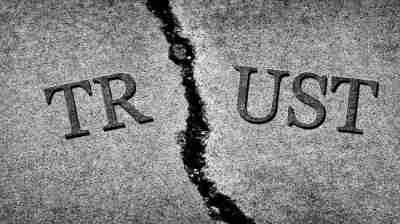 If he departs from them, he is not acting on behalf of the donor of the assets; he has betrayed his trust. In the coming zero government society his loss of reputation will rightly put him out of business.